Many small businesses build a brand for years before realising someone else can legally register the same name first — and once that happens, undoing it is far harder (and costlier) than registering early would have been. Trademark registration is one of the most under-used protections available to small businesses in India, largely because the process and cost aren't well understood. Here's exactly what's involved.
Quick Summary
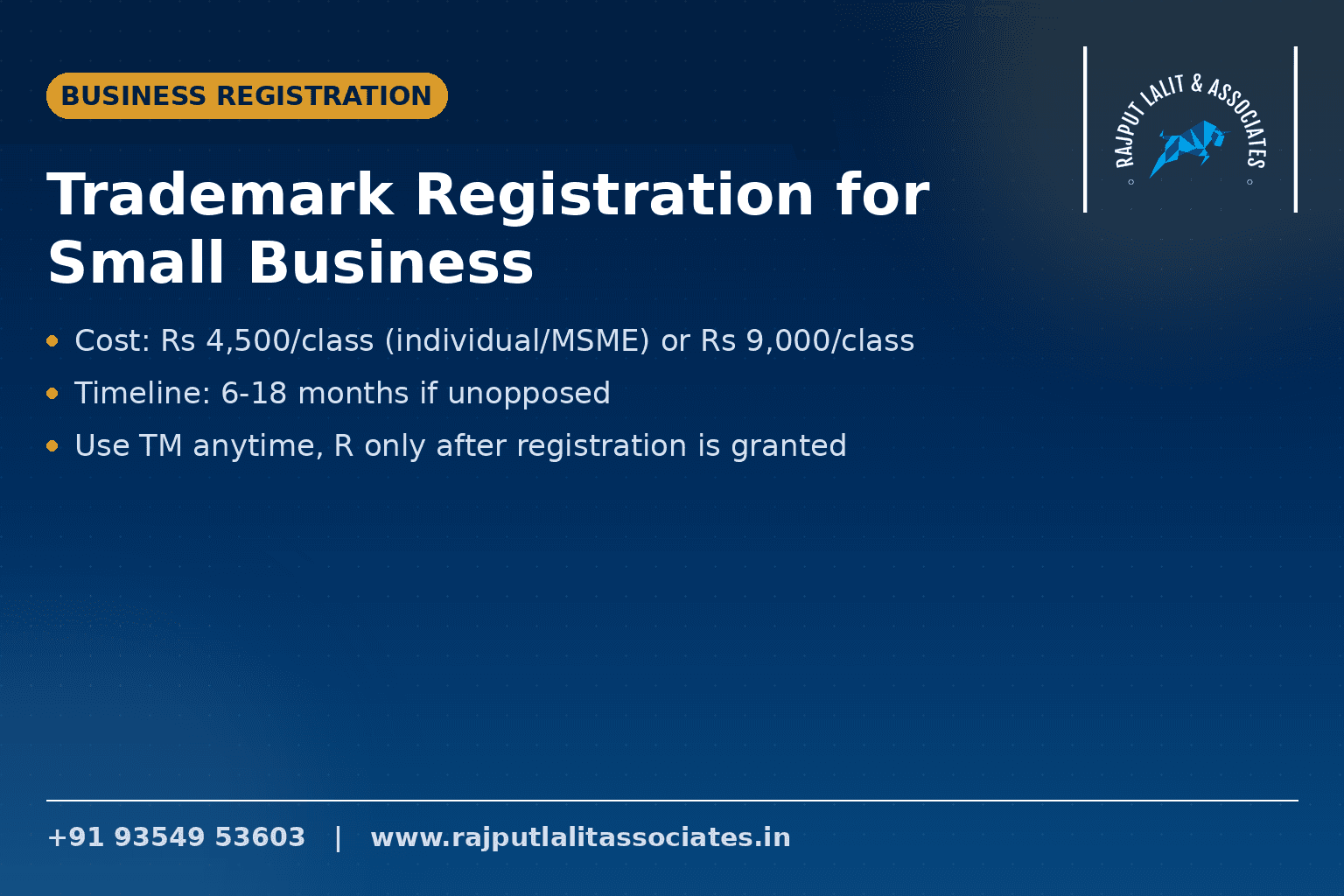
- Cost: ₹4,500/class (individual/startup/MSME e-filing) or ₹9,000/class (others)
- Timeline: 6-18 months if unopposed; 2+ years if opposed
- Classes: 45 total — 1-34 goods, 35-45 services
- ™ symbol: usable immediately; ® symbol: only after registration certificate issues
- Validity: 10 years, renewable indefinitely (Form TM-R)
Registration Process & Fees
| Applicant Type | E-filing Fee (per class) | Physical Filing |
|---|---|---|
| Individual / Startup / MSME | ₹4,500 | ₹5,000 |
| Company / LLP / Others | ₹9,000 | ₹10,000 |
After filing (Form TM-A), the application goes through examination — the Registry checks for conflicts with existing marks and compliance with the Trade Marks Act. If the examiner raises an objection, you get 30 days to respond; missing this can abandon your application entirely. Once accepted, the mark is published in the Trade Marks Journal for a mandatory 4-month opposition window, during which anyone can formally object. If nobody opposes, the registration certificate follows.
Choosing the Right Class Matters More Than the Filing Itself
Trademark protection applies strictly to the class(es) you register under — not to your business or brand as a whole. India uses the international NICE Classification of 45 classes (1-34 for goods, 35-45 for services). A mark registered only for clothing (Class 25) gives you zero legal ground against someone using a similar name for software services (Class 42). Think through every product and service line — current and reasonably near-future — before filing, since adding a class later means a fresh application and fresh fee.
Why Registered Protection Beats Staying Unregistered
An unregistered brand isn't completely without recourse — you can still pursue a common-law "passing off" claim — but this requires proving your brand has built genuine market reputation and that a competitor is actively deceiving customers, which is a slower and costlier fight than simply presenting a registration certificate. A registered trademark gives you a legal presumption of ownership, the right to use ®, and a much faster route to an injunction against infringers.
Trademark Registration Support
Rajput Lalit & Associates helps small businesses choose the right classes, file trademark applications, and respond to examination objections. Book a free consultation or see our Business Registration service.
Frequently Asked Questions
Can I use the TM symbol before my trademark is officially registered?
Yes — the ™ symbol can be used immediately on any brand name, logo, or slogan the moment you start using it commercially, even before you file an application. It signals a common-law claim to the mark. The ® symbol is different: you can legally use it only after the registration certificate is actually issued. Using ® before registration is a punishable offence under the Trade Marks Act, 1999.
How much does trademark registration cost?
Government filing fee is ₹4,500 per class for individuals, startups, and MSMEs filing online (₹5,000 for physical filing), and ₹9,000 per class for companies, LLPs, and other entities (₹10,000 physical). This is per class — if your brand needs protection across multiple classes (e.g., both a product and related services), the fee multiplies accordingly. Filing fees are non-refundable regardless of outcome.
How long does trademark registration actually take?
Realistically 6-18 months if unopposed — examination takes about 1-3 months, then (if accepted) the mark is published in the Trade Marks Journal for a mandatory 4-month opposition window. If a third party files an opposition, the process can extend well beyond 2 years. You can start using ™ and building your brand immediately after filing; you don't have to wait for the certificate.
Which trademark class should I file under?
India follows the international NICE Classification system with 45 classes — Classes 1-34 cover goods (products), Classes 35-45 cover services. Protection applies strictly to the class(es) you register in, not to your business as a whole. A mark registered only in Class 25 (clothing) gives zero protection if a competitor uses a similar name for Class 42 (software services) — so it's worth thinking through every product/service line you currently offer or plan to soon.
What if I never register my trademark — am I completely unprotected?
Not completely, but your protection is much weaker. An unregistered mark can only rely on common law 'passing off' claims, which require proving your brand has built up genuine reputation and goodwill, and that the imitator is deceiving customers — a harder and costlier case to win than simply pointing to a registration certificate. A registered trademark gives you a presumption of ownership and a much stronger, faster legal remedy.
Does trademark registration need to be renewed?
Yes — a registered trademark is valid for 10 years from the registration date, and must be renewed (Form TM-R) to continue protection. It can be renewed indefinitely, in principle protecting your brand forever, but missing the renewal window means paying a surcharge, and if it lapses further, the mark may need to be restored or could become available for someone else to register.
Disclaimer: This article is for general information based on the Trade Marks Act, 1999 and current Trade Marks Registry fee schedules, as of September 2026. Fees, timelines, and procedures are subject to periodic revision — please verify the current position on the IP India portal or consult a professional before relying on it.